

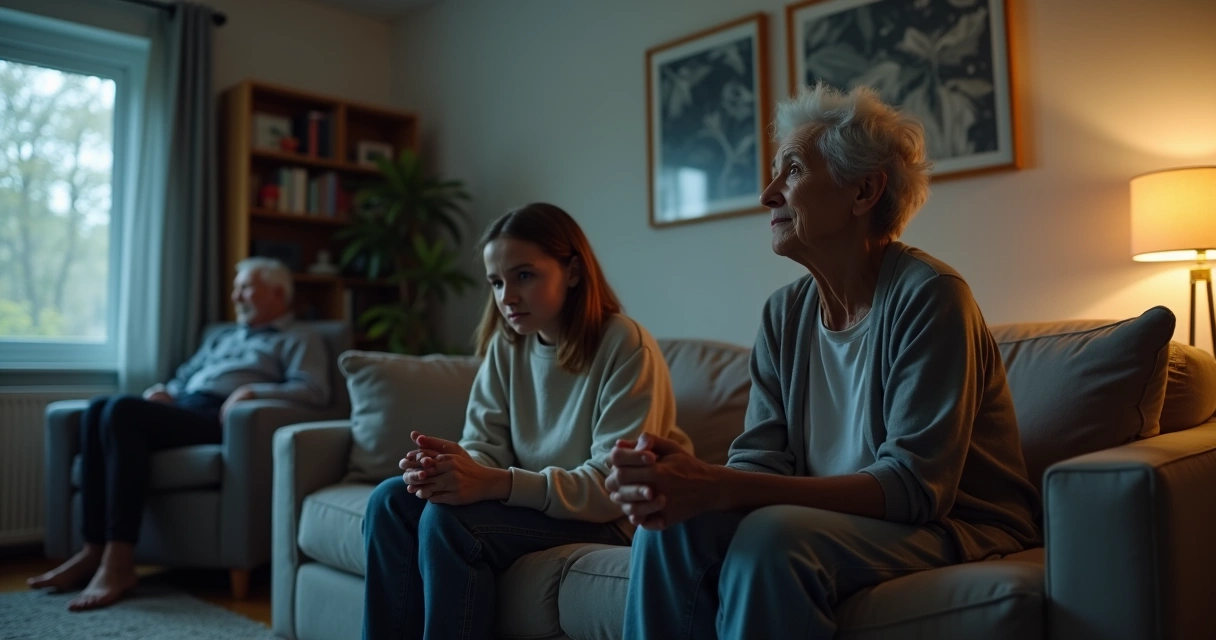
Anxiety is not only a private experience. Often, it is a silent thread running through the stories of families, systems, and even cultures. We have seen that people rarely realize how much their daily actions, words, and unspoken attitudes teach the next generation how to relate to their own worries and fears. Quite often, what one generation does not process intentionally, becomes the next generation’s weight to carry—although in new forms. In our experience, the transfer of anxiety is subtle, yet powerful. It happens through what we can call unconscious rituals: repeated patterns or practices that silently train children and younger members of a group how to respond to life’s challenges.
Many of these rituals appear normal, or even loving, at first glance. However, under the surface, they reinforce and transmit unprocessed tension, worry, and insecurity. Let’s reflect on seven everyday patterns that act as hidden transmitters of anxiety across generations, shaping how people relate to themselves, each other, and the world.
The seven rituals that quietly spread anxiety
1. Anticipatory worry as a family language
In some families, talking about what could go wrong is almost a form of bonding. We talk about dangers, worst-case scenarios, or everything that “might happen.” Children learn that love means protecting others from risk—but also that the world is dangerous by default.
Anticipatory worry teaches children to expect problems, rather than solutions.
This pattern rarely feels dramatic in the moment. Worrying together keeps us close, involved in each other’s lives. But over time, it creates a script where security is never fully achieved, and calm becomes suspicious. The habit is passed on unintentionally, making anxiety seem normal, even protective.
2. Over-control disguised as care
We often see families or groups that try to manage every detail “for your own good.” Rules, schedules, instructions—always given with love, but with an underlying message: “If I do not control this, something bad will happen.”
Control that pretends to be love always breeds silent fear.
This unconscious ritual tells children that trust is dangerous, and that life must be managed rather than lived. Children internalize the sense that safety comes only from constant vigilance. Later, they may find it hard to let go, trust themselves, or accept uncertainty as part of life.
3. Avoidance of difficult topics
In many households, uncomfortable emotions or difficult events are “handled” by not naming them. We do not mention grief, money troubles, or conflict. Children sense something is wrong, but they are left to imagine it. Unspoken, anxiety grows in the gaps of silence.
When emotions are avoided, children learn that feelings are dangerous and best hidden.
This silence not only fuels personal anxiety, but also makes it hard for future generations to seek help, express vulnerability, or build real emotional connection. The “don’t ask, don’t tell” ritual is a powerful transmitter of hidden worry.
4. Modeling self-sacrifice and neglect
We often witness adults who never rest, who put everyone else first, who “have no time” for their own needs because “the family comes first.” At first glance, this seems noble. But the underlying lesson is that personal wellbeing is less valuable than keeping others comfortable.

Self-sacrifice as a routine creates anxious guilt in the next generation for wanting or needing rest.
Children copy what they see, assuming that constant self-denial is the “right” way to be in relationships. As adults, they may struggle to value their own limits, leading to chronic stress and burnout—all in the name of loyalty.
5. Emotional over-involvement
Some family systems develop a ritual where everyone’s mood is everyone’s business. A sad person cannot have privacy; a happy one must “spread the joy.”
- Personal disappointments become family projects.
- Burdens and achievements are shared equally, whether or not the individual wants it.
This blurring of boundaries teaches children that their emotions are not fully their own, leading to confusion about where anxiety “belongs.” The worry is not only about their own problems, but about carrying the emotional struggles of others as well. Independence feels risky.
6. Rewarding perfectionism and urgency
We see it often: children who are praised for excellence, who are always expected to “do their best,” adults who rush from task to task and see rest as laziness. This builds an invisible structure where worth is measured by achievement and busyness.
The reward for perfectionism is never peace, but more anxiety.
In our work, we notice that perfectionism becomes a family language—always striving, never feeling “enough.” The result is a constant backdrop of tension. Children internalize the belief that love, respect, or self-esteem must be earned through anxious effort.
7. Disguised pessimism as realism
Sometimes, skepticism or negative thinking is taught as “being realistic.” Families may “prepare” children for disappointment, talking about “how things really are.” On the surface, this appears practical. In reality, it sets a tone where hope is suspect, dreams are risky, and anxiety about the future becomes a daily habit.
Disguised pessimism convinces the next generation that happiness must be earned after anxiety, rather than alongside it.
This ritual closes the doors to optimism and increases stress, making it harder for people to see opportunities, take healthy risks, or trust in positive change. Over time, the cycle of anxious expectation becomes predictable and hard to break.

Moving from unconscious ritual to conscious choice
Recognizing these rituals in our own experience takes honesty, patience, and sometimes help from others. The patterns are old, and they often feel “normal,” but awareness makes all the difference. Every time we pause, notice, and choose a new response, even a small one, we change the script just a little for those who come after.
If you are curious to read more about these systemic connections or want to go further, our systemic awareness articles offer insights into invisible generational patterns. For those who wish to understand more about nurturing balanced feelings, our emotional health section can help you reflect on new habits. For deep questions about meaning and responsibility, see our philosophy library. If you want to find more content from our editors, our team page gathers all of our latest work, or use the search tool to find a precise topic.
Conclusion
Intergenerational anxiety is almost never about one big event, but small, everyday choices repeated over time. Many rituals that spread anxiety are backed by love, but lack of awareness keeps them alive. As we learn to see, name, and change these patterns, we create space for new stories—where calm, trust, and real connection have a place.
Each new moment of awareness is not only a gift to ourselves, but also to everyone connected to us—present and future. The path from anxiety to security is always systemic, always relational, always possible.
Frequently asked questions
What are unconscious anxiety rituals?
Unconscious anxiety rituals are repeated behaviors, attitudes, or communication patterns within families or groups that quietly pass on anxiety without deliberate intent. They are often normalized as parts of everyday life—such as constant worrying, avoiding emotional topics, or expecting perfection—but, over time, they train new members to experience and respond to anxiety in similar ways.
How do rituals spread anxiety in families?
Rituals spread anxiety in families by shaping how members think, feel, and talk about challenges, emotions, and uncertainty. For example, when worry or over-control is the family’s response to stress, children grow up believing this is the only or best way to react. Through years of repetition, these patterns become automatic, making anxiety seem normal or even necessary.
Can I stop passing anxiety to kids?
Yes, we can interrupt these patterns by noticing and questioning our automatic responses. Taking time to process our own feelings, to talk openly and calmly about worries, and to encourage balanced emotional habits can help break the cycle. Small changes—such as allowing space for rest or letting go of the need to control—create healthier rituals for future generations.
What signs show anxiety is generational?
Generational anxiety often shows up as recurring behaviors or beliefs: several family members may struggle with constant worry, over-control, difficulty relaxing, or strong perfectionism. If similar emotional patterns appear across siblings, parents, and even grandparents, or if certain topics are always avoided, these are signs that anxiety may be passed down unconsciously.
How can families break these anxiety patterns?
Families can break anxiety patterns by bringing attention to their routines, having honest conversations, and supporting each member’s individuality. This includes making space for uncomfortable emotions to be named, learning new ways to respond to stress, and encouraging boundaries between personal and shared worries. Even gentle, consistent change in one generation can spark healing in the next.