

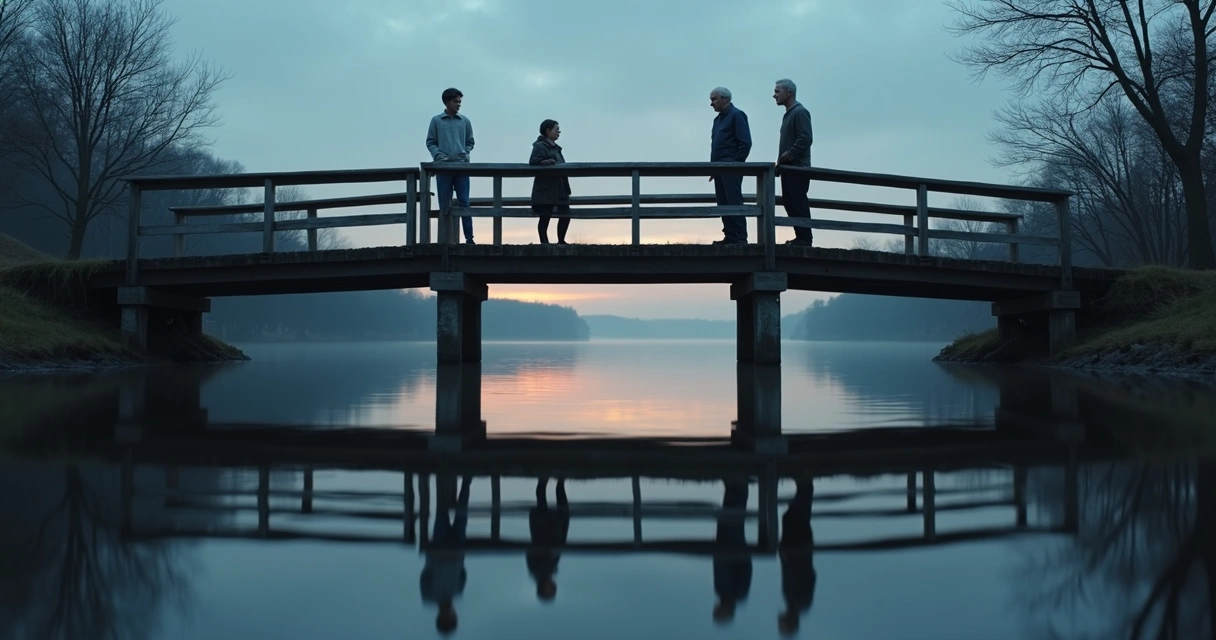
We often think conflict starts in the present. A sharp tone. A late reply. A hard conversation at home or at work. But in our experience, many conflicts begin much earlier, long before the people involved know what is being repeated.
Inherited trauma can shape how we react to tension, set boundaries, read danger, and seek safety in relationships.
This does not mean every disagreement comes from family history. It does mean that unresolved pain can echo through generations and quietly train our nervous system. Then, when conflict appears, we may respond to old fear instead of the moment in front of us.
We see this in ordinary scenes. One person shuts down during a calm discussion. Another becomes intense within seconds. Someone apologizes too fast, not from clarity, but from fear of rejection. Someone else leaves the room because staying feels unbearable.
Conflict is rarely just about the conflict.
How trauma travels into present conflict
Inherited trauma is not only about stories we were told. It also lives in silence, habits, loyalties, and body memory. A family may never name what happened, yet everyone adapts around it. Children learn what is safe to say, what must be hidden, and how close is too close.
If anger in the family once led to humiliation or violence, a raised voice today may feel far bigger than it is. If grief was ignored for years, honest emotion may now feel threatening. These patterns become conflict styles.
In our view, conflict resolution is never just a communication skill. It is also a stress response shaped by experience.
Public health data supports the wide reach of early adversity. A large survey of 214,157 U.S. adults across 23 states found that 61.6% reported at least one adverse childhood experience, and 24.6% reported three or more. The same study showed higher average exposure among people facing social and economic strain. That tells us something sobering. Many adults enter conflict while carrying old wounds that were never fully processed.
When we study systemic awareness, we start to notice that a person may be reacting not only as an individual, but also as part of a larger emotional history.
Common conflict styles linked to inherited trauma
Not everyone with trauma responds the same way. Still, some patterns appear often enough that they deserve attention. These styles can look like personality, but many are forms of protection.
We tend to see several repeated responses:
- Withdrawal, when a person goes silent, leaves, or disconnects to avoid overload.
- Compliance, when a person agrees quickly to stop tension, even if the agreement is false.
- Conflict engagement, when a person moves toward intensity because calm does not feel safe or familiar.
- Submission, when someone gives up their position from fear, not trust.
- Separation, when distance becomes the main way to regulate distress.
Research on 434 U.S. college students found that adverse childhood experiences are strongly associated with non-positive conflict resolution styles, especially conflict engagement, withdrawal, and compliance in intimate relationships. We find this helpful because it shows that poor conflict patterns are not always signs of bad intent. Often, they are signs of adaptation.
Another study of 91 romantic couples in India reported that adverse childhood experiences were linked to specific patterns during conflict, including greater submission in people with emotional neglect or sexual abuse histories and more separation where family mental illness was present. That kind of detail matters. Trauma does not create one single response. It shapes different forms of self-protection.

Why the body reacts before the mind
Many people say, “I know this is a small issue, so why am I reacting so strongly?” We think that question opens the right door. The body often detects danger before the thinking mind forms a clear story.
Inherited trauma can make present conflict feel like a threat to survival, even when the current risk is low.
That is why a simple disagreement can trigger shaking, numbness, rage, confusion, or the urge to escape. It is not always logical. It is often protective.
We have seen this happen in families and in leadership spaces. A manager receives feedback and hears attack. A partner hears a request and feels control. A parent hears a child’s protest and feels disrespect so intense that proportion disappears. In each case, the nervous system may be defending against an older wound.
This is one reason we value work around emotional health and reflective practice. Better conflict is not only about saying the right words. It is also about creating enough inner steadiness to stay present when stress rises.
How family rules shape adult communication
Every family teaches rules about conflict, whether spoken or not. Some households reward silence. Others reward obedience. Some punish emotion. Some turn every disagreement into a test of loyalty.
These rules can survive for decades:
- Do not question elders.
- Do not expose family pain.
- Keep peace at any cost.
- Attack before you are attacked.
As adults, we may carry these commands into marriage, friendship, parenting, and work. Then we wonder why honest dialogue feels so hard. We are not just speaking as ourselves. We may be speaking from old family permission structures.
When we reflect through philosophy, we begin to ask better questions. What do we owe the past, and what must stop with us? Which loyalties protect life, and which ones keep harm in motion?
What stays unnamed often stays active.
How inherited trauma appears in leadership and groups
Conflict style does not stay inside private relationships. It travels into teams, schools, and communities. We have seen leaders avoid direct feedback because tension feels unsafe. We have also seen leaders become reactive and punitive because disagreement activates old fear.
Unprocessed trauma in leadership can turn ordinary tension into control, avoidance, or blame.
This affects culture. Meetings become guarded. People hide mistakes. Honest disagreement disappears, or explodes. In settings like these, the issue is not only policy. It is the emotional field created by repeated unresolved reactions.
That is why learning from leadership perspectives can help us see conflict as both personal and systemic. One person’s pattern can shape the tone of a whole group.

Ways to begin changing the pattern
Change starts when we notice that our conflict style may be learned, not fixed. That can be humbling. It can also bring relief.
We suggest beginning with a few grounded steps:
- Track your body during conflict. Notice heat, pressure, numbness, or urgency.
- Name your default move. Do you attack, appease, freeze, or leave?
- Ask what feels threatened. Is it respect, safety, belonging, or control?
- Separate past from present. What belongs to this moment, and what feels older?
- Practice repair after rupture. Return, clarify, and speak with more truth.
Sometimes a short pause changes everything. A breath. A glass of water. Ten minutes before replying. These acts may seem small, but they help the body learn that conflict can be faced without collapse or attack.
If you want to keep reflecting on this theme, we suggest reading more on inherited trauma.
Conclusion
Inherited trauma shapes conflict resolution styles by teaching the body and mind what to expect from tension. For some, conflict means danger. For others, silence means danger. That difference changes how people speak, listen, defend, and repair.
We believe healing begins when we stop seeing these reactions as random flaws and start seeing them as patterned responses with a history. Once that history becomes visible, choice returns. We can learn to stay present longer. We can respond with more measure. We can interrupt what was passed down without passing it forward.
That is how personal healing begins to change relationships, families, and groups. One conflict at a time.
Frequently asked questions
What is inherited trauma?
Inherited trauma is the emotional and behavioral impact of unresolved pain passed through generations. It may move through family stories, silence, stress patterns, beliefs, and learned survival responses.
How does inherited trauma affect conflict?
It can make people react to present tension as if it were an old threat. This may lead to withdrawal, people-pleasing, intense defensiveness, submission, or sudden emotional distance during disagreement.
Can trauma be passed between generations?
Yes. Trauma can pass between generations through parenting patterns, family rules, emotional absence, fear, and repeated ways of handling stress and relationships. People may inherit responses even when the original events are rarely discussed.
How to recognize inherited trauma in myself?
We can start by noticing repeated overreactions, shutdown, fear of conflict, guilt after setting boundaries, or family patterns that seem to repeat across generations. Strong body responses during small disagreements can also be a sign.
How can I change my conflict style?
Change begins with awareness. Notice your usual reaction, slow your body before responding, reflect on what feels threatened, and practice clearer communication. Support from therapy, guided reflection, or structured emotional work can also help build safer responses over time.