

We often think of language as a tool that only describes reality. In our experience, it does more than that. It sorts people, gives weight to some stories, and pushes other stories to the edges. Quietly. Daily. Often without bad intent.
We may hear one sentence at a meeting, at home, or in the news, and it sounds harmless. Yet the wording tells us who belongs, who leads, who gets doubted, and who must adjust. Language does not just reflect a system. It helps keep that system in place.
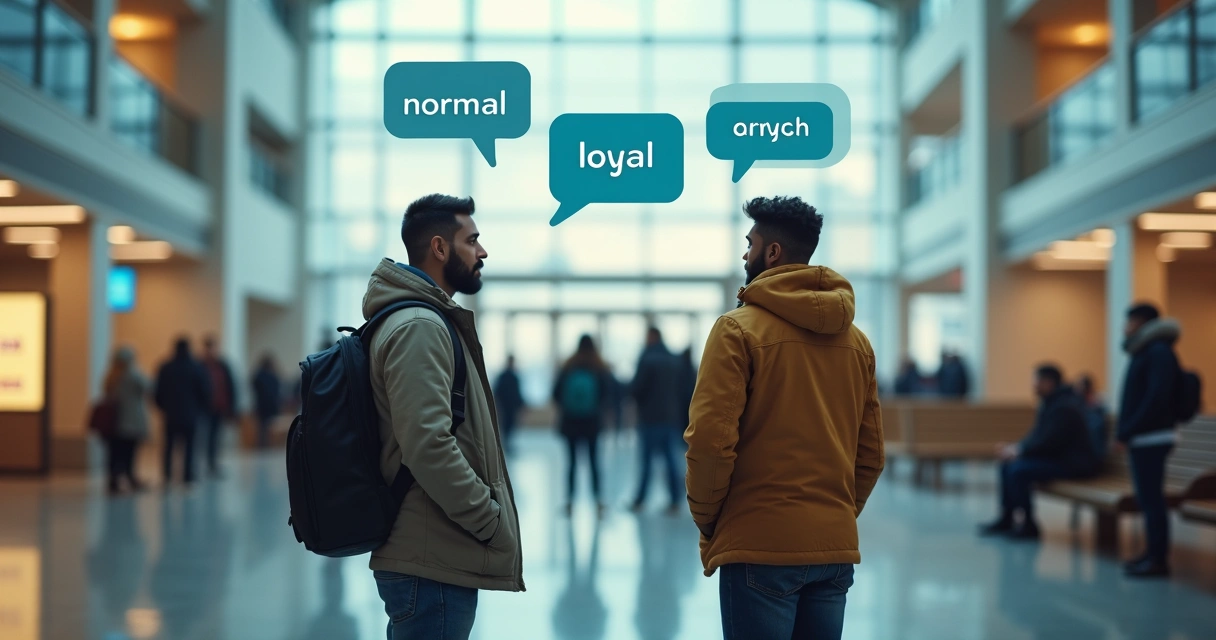
We have seen this in simple moments. A child is called “dramatic” while an adult is called “direct.” A worker is praised as “loyal” when they never question pressure. A family says “that is just how we are,” and pain gets renamed as tradition.
Words train perception.
Below, we will look at 10 subtle ways this happens, and why paying attention can change more than one conversation.
Labels that become identity
When we turn a behavior into a fixed label, we shrink a person. Saying someone “acted defensively” leaves room for context. Saying they “are difficult” makes the behavior sound permanent.
These labels travel through systems fast:
In families, one person becomes “the sensitive one.”
At work, one colleague becomes “not leadership material.”
In schools, one child becomes “a problem student.”
After that, new facts often get filtered through the old label. We stop seeing the person and start seeing the assigned role.
Passive voice that hides responsibility
“Mistakes were made.” We have all heard phrases like this. They sound polished, but they remove the actor. Harm appears as if it came from nowhere.
This is one of the cleanest ways systems protect themselves. A policy did not fail by magic. A cruel comment did not appear on its own. Someone chose, approved, ignored, or repeated something.
When language removes the subject, accountability becomes harder to reach.
That is why direct wording matters. “The team overlooked the warning” tells a different truth than “the warning was overlooked.”

“Normal” as an invisible standard
Words like “normal,” “professional,” or “appropriate” sound neutral. Yet they often hide an unstated model. Normal for whom? Professional by whose rules?
We notice that these terms can reward whatever is already dominant while framing difference as a problem. Accent, tone, emotional style, or family structure can all be judged against a hidden center.
In many leadership conversations, this shows up when calm speech is treated as maturity, while visible emotion is treated as instability. That is not always wisdom. Sometimes it is only preference dressed up as fact.
Stories that make inequality sound natural
Some phrases make social patterns sound like laws of nature. “Boys are less expressive.” “Some communities do not value education.” “That neighborhood has always been like that.” These lines skip history, pressure, and unequal conditions.
We think this matters because what sounds natural rarely gets questioned. A working paper on regional inflation narratives showed how different wording shapes public understanding of the same economic issue. The facts do not enter our minds untouched. They arrive framed.
Once a pattern is framed as natural, people adapt to it instead of asking who benefits from the story.
Emotional words that assign moral value
Language often divides people into the reasonable and the emotional. But that split is rarely neutral. One group gets “concerned.” Another gets “angry.” One person is “passionate.” Another is “unstable.”
We see this often in emotional health discussions, where some feelings are validated and others are treated as signs of weakness. Yet emotions carry information. The issue is not that emotion exists. The issue is how it gets named.
A large study of books over 125 years found a rise in language tied to cognitive distortions and emotional strain, suggesting that public expression patterns shift with culture and distress, according to research on long-term changes in emotional language. The words around distress shape whether it is understood, mocked, or hidden.
“We” language that quietly excludes
Community language can heal, but it can also close doors. “We all know.” “People like us.” “Our kind of family.” It sounds warm from inside the circle. From outside, it can feel like a wall.
Sometimes exclusion is not loud. It comes in a smile. In a familiar phrase. In a shared joke that tells one person they are still a guest.
For those interested in broader systemic awareness, this is one of the clearest places to listen. Group identity is often built by naming belonging and difference at the same time.
Repeated villain language
Systems often stay reactive by naming simple enemies. The lazy worker. The broken family member. The corrupt outsider. The selfish generation. Once a villain is assigned, complexity drops.
This style of wording spreads fast because it is emotionally sticky. Research from political narrative studies on virality and memory found that stories with clear villains were far more likely to be shared than neutral ones. That helps explain why blame-heavy language takes over so quickly.
The faster a narrative gives us someone to blame, the less likely we are to inspect the system around the problem.
Translation that ranks some voices above others
We often treat translation tools and global communication as neutral bridges. They are not always. Some voices get carried with ease, while others get flattened, simplified, or missed.
Research from multilingual AI bias findings warns that widely spoken languages can dominate while minority languages lose presence. This does more than affect grammar. It shapes whose knowledge is searchable, repeatable, and seen as standard.
When a language is pushed aside, the worldview inside that language is pushed aside too.
AI summaries that sound neutral but guide opinion
Many people now read summaries instead of full texts. That seems harmless until we ask how those summaries are framed. Word choice can tilt moral tone, social meaning, and political feeling without announcing that it is doing so.
A Yale University study on framed AI historical summaries found that subtle ideological framing could shift readers’ attitudes. That should make us pause. Neutral tone and real influence can exist in the same paragraph.
We feel this more when people are tired. A quick summary can become a borrowed viewpoint.
Inherited phrases that stop reflection
Some of the strongest systemic narratives arrive as family wisdom, workplace culture, or social common sense. “Do not make trouble.” “Be grateful.” “Strong people move on.” “This is just how life is.”
These phrases may have started as survival tools. But over time, they can become barriers to awareness. In parts of philosophy, we often return to one question: what kind of life becomes possible when we question the sentence we inherited?
That question can be uncomfortable. It can also be freeing.
Search habits that keep the same answers on top
Language also shapes what we look for. If we only search using familiar labels, we often find more of the same narratives. The system then feels confirmed because our wording led us back to it.
Sometimes a small shift helps. Instead of searching for proof that a person is difficult, we might look for patterns of conflict, stress responses, or group roles. A broader search can open a broader view, and tools like topic-based search paths can support that shift.
Conclusion
Subtle language is still powerful language. It can hide power, excuse harm, freeze identities, and make old patterns feel natural. It can also do the opposite. It can name context, restore responsibility, and make room for truth.
We do not need perfect words. We need more conscious ones. When we slow down and listen for what a phrase assumes, protects, or erases, we begin to interrupt the narrative, not just repeat it.
Change can start in one sentence.
Frequently asked questions
What are systemic narratives in language?
Systemic narratives in language are repeated ways of speaking that support a larger social pattern. They shape how we see roles, power, belonging, blame, and value. They often sound ordinary because they have been repeated for so long.
How does language reinforce social norms?
Language reinforces social norms by rewarding some behaviors and marking others as strange, weak, rude, or wrong. Words like “normal,” “appropriate,” or “professional” can quietly push people toward one accepted model without naming it directly.
What are examples of subtle language bias?
Examples include fixed labels such as “difficult,” passive phrases that hide who caused harm, emotional words that judge some feelings more harshly than others, and group language like “people like us” that creates soft exclusion.
How can I spot biased language?
We can spot biased language by asking simple questions: Who is being described? Who is missing from the sentence? Who gets agency? Who gets context? If one group is always individualized and another is generalized, bias may be present.
How to avoid reinforcing systemic narratives?
We can avoid reinforcing systemic narratives by choosing precise words, naming responsibility clearly, avoiding fixed identity labels, and questioning inherited phrases. Good language does not flatten people. It gives context without removing accountability.