

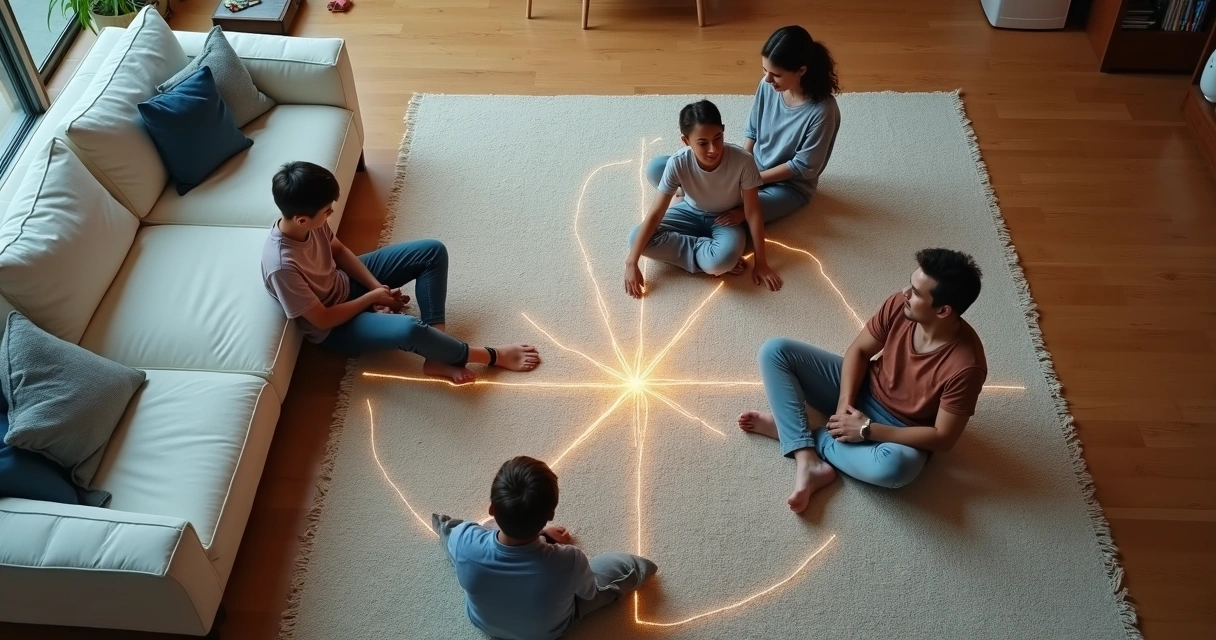
Blended families often begin with hope. Two adults choose a shared life. Children enter a new home structure. Everyone wants peace. Yet after the first months, some homes start to feel tense in ways no one can fully explain.
We often see this pattern. One child becomes distant when the stepparent speaks. One parent becomes soft with their own child but strict with the other children. A former partner is not present in the room, but their place still shapes decisions. Nobody says it out loud. Still, everyone feels it.
Invisible alliances are hidden emotional bonds that shape who protects whom, who opposes whom, and who feels left out in a blended family.
These alliances are not always bad on purpose. Many start as attempts to feel safe. A mother may overidentify with her child after divorce. A father may avoid correcting his son to reduce guilt. A stepparent may form a quiet team with one child who seems easier to reach. What begins as comfort can become division.
What is hidden still acts.
What invisible alliances look like
In our experience, invisible alliances rarely announce themselves. They show up in repeated moments. A teen refuses a house rule only when the stepparent says it. A parent steps in fast to defend their biological child before hearing the full story. Family plans keep bending around one relationship while others adapt in silence.
Many of these patterns match what we see in common blended family dynamics and loyalty conflicts between children and biological parents. Feelings of exclusion can also affect stepparents and stepchildren. When that happens, simple conflicts can carry much more emotional weight.
Here are some signs we watch for:
One parent and one child act like a unit against the rest of the household.
A child feels they must protect a biological parent from the new partner.
The stepparent has authority in chores but not in emotional matters.
Rules change depending on whose child is involved.
Someone is treated as the problem, while deeper tensions stay unnamed.
Conversations become triangular, with messages passed through a child or partner.
None of these signs alone proves a hidden alliance. But when several repeat, they deserve attention.
Why they form so easily
Blended families carry more than present-day roles. They also carry grief, guilt, fear, and unfinished stories. We think this is why some homes feel split even when everyone is trying hard.
A child may fear that liking a stepparent is a betrayal of the other parent. An adult may fear losing closeness with their child if they fully support the new partner. Another adult may stay outside family decisions because they do not want to seem intrusive. Each move makes sense for a moment. Over time, the structure hardens.
Most hidden alliances begin as survival responses, not as acts of malice.
We have seen families where dinner conflict was never about dinner. It was about loyalty. A boy refused to sit near his stepfather every night. The mother read it as disrespect. The child later admitted he felt disloyal to his father when he enjoyed that closeness. That one detail changed the whole conversation.
If this topic speaks to your own home, our reflections on blended families can help frame these experiences with more clarity.

How to spot the pattern without blaming anyone
It helps to slow down and look at repetition, not isolated incidents. We suggest asking simple questions and staying close to facts at first.
Who becomes defensive, and around whom?
Who gets protected before the full story is known?
Whose voice carries weight in decisions, and whose voice fades?
When conflict rises, who joins with whom?
Which relationship seems untouchable, even when it harms the group?
This kind of observation is part of wider systemic awareness. We learn a lot when we stop asking, “Who is wrong?” and start asking, “What bond is being protected here?”
We also encourage people to notice physical reactions. Sometimes the body sees the alliance first. A stepparent may feel tense before family visits. A child may become quiet when one adult enters the room. A parent may rush to soothe one child while becoming cold with another. These reactions can point to hidden loyalty lines.
If one relationship always overrides fairness, an invisible alliance may be shaping the home.
Common forms of hidden alliances
Not all alliances look the same. Some are loud. Some are quiet. We tend to see a few forms again and again.
The first is the parent-child coalition. This happens when a biological parent and child stay emotionally fused, leaving little room for the new partner. The second is the guilt alliance. A parent who feels bad about the divorce avoids limits with their child and leaves the stepparent exposed. The third is the peacekeeping alliance. One child becomes the emotional helper of an adult and loses their natural place as a child.
These patterns affect emotional health across the whole family. That is why work around emotional health matters so much in blended homes.
At times, the same pattern appears in leadership at home. One adult carries formal authority, but another bond holds the real power. This split creates confusion, much like what we often discuss in leadership when authority and trust do not align.
What helps restore balance
Once we notice the alliance, the goal is not to shame anyone. The goal is to restore order and honesty. That begins with adults taking adult roles again.
A few practices often help:
Name patterns gently instead of accusing. Say what repeats.
Keep children out of adult tension and adult decision making.
Build shared rules that apply across the household.
Make room for grief, since many loyalty conflicts hide sadness.
Protect the couple bond without forcing instant closeness from children.
We think families improve when adults can tolerate discomfort without making a child carry it. That sounds simple. It is not always easy. Still, it changes the tone of the house.
There is also a deeper question beneath structure: what do we owe one another inside a family formed after loss and change? That is not only practical. It is ethical. Our thinking on philosophy often returns to this point. A healthy family order does not erase old bonds, but it does ask each person to stand in a truthful place.
Conclusion
Invisible alliances in blended families are often quiet, but they are rarely small. They shape trust, rules, closeness, and conflict. We spot them by watching who joins with whom, who gets protected, and where fairness starts to bend.
When we bring these patterns into the open with care, blame can give way to understanding. That shift matters. A child no longer has to carry divided loyalty alone. A stepparent no longer has to guess where they stand. A parent can stop choosing between guilt and partnership.
Healing starts when hidden loyalties are seen, named, and placed in a healthier order.
Frequently asked questions
What are invisible alliances in families?
Invisible alliances are unspoken emotional loyalties between family members. They often shape behavior behind the scenes. In blended families, this may look like a child protecting a biological parent, or a parent siding with their own child in ways that leave others outside.
How can I identify hidden family alliances?
We can identify them by watching repeated patterns. Notice who teams up during conflict, who gets defended quickly, whose needs come first, and whether one bond seems protected at the cost of the whole family. Repetition matters more than one isolated event.
Why are invisible alliances a problem?
They create confusion, unfairness, and emotional distance. Children may feel torn between parents. Stepparents may feel excluded. Adults may lose trust in each other. Over time, hidden alliances can block healthy roles and make normal family stress feel much heavier.
How to address secret alliances at home?
Start by naming patterns calmly and without blame. Keep children out of adult disputes. Set shared rules, speak directly instead of through others, and allow space for grief and loyalty conflict. The aim is not to break bonds, but to place them in a healthier order.
Can therapy help with family alliances?
Yes. Therapy can help family members see patterns they struggle to name on their own. It offers a safer setting to untangle loyalty conflicts, improve boundaries, and rebuild trust. For many blended families, this support makes hidden dynamics easier to face and change.