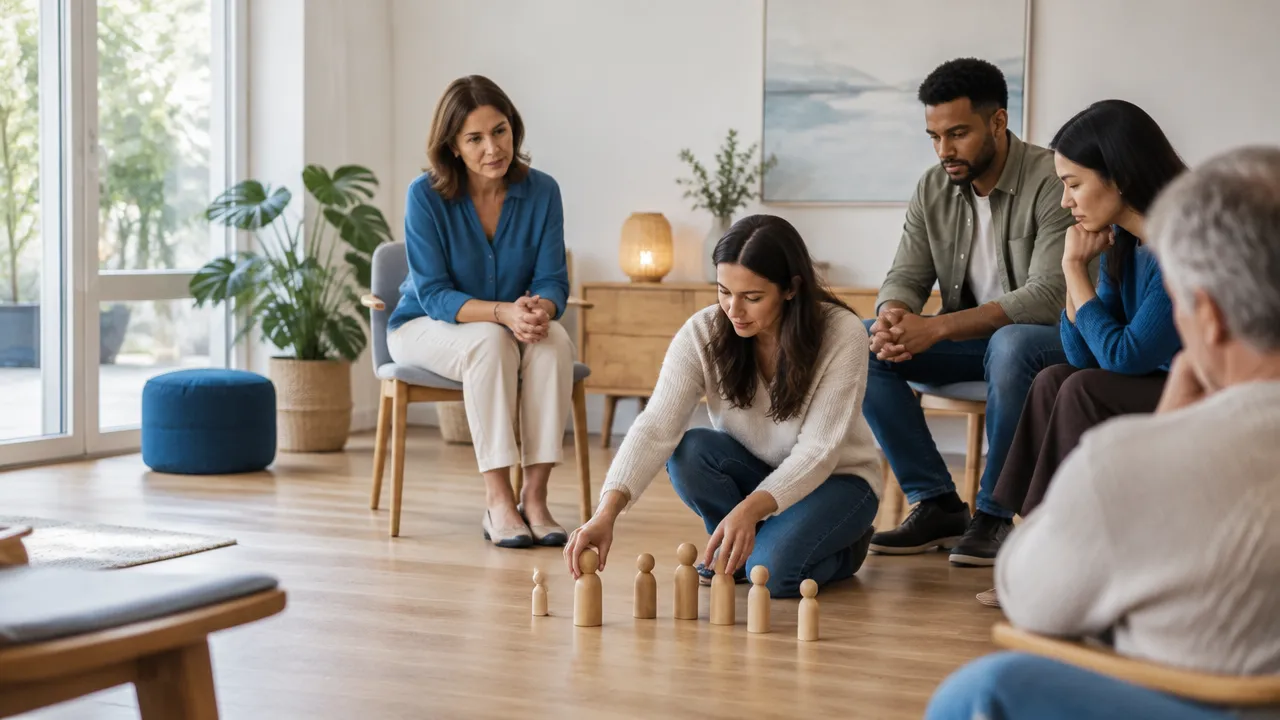

Collective trauma describes how shared violence, loss, disaster, or disruption can affect a community’s sense of safety and connection. It does not mean everyone responds alike, or that a whole population has one diagnosis. Understanding its effects helps residents, leaders, and caregivers support recovery without turning shared pain into a single story.
Key points for understanding shared community pain
- A shared event can affect people differently, even within the same family or neighborhood.
- Impact spreads through relationships, routines, institutions, and access to resources, not only through individual symptoms.
- What gets passed between generations may include coping habits and social conditions, not just memories of an event.
- Recovery works best when people have safety, choice, connection, and practical support.
- Community care can help, but persistent distress may call for qualified professional support.
What does collective trauma mean beyond one shared event?
Collective trauma is a way to describe the lasting emotional and social effects a shared threat or loss can have on a group. The event may be sudden, such as a wildfire or act of violence, or sustained, such as forced displacement or systemic persecution.
The phrase does not mean that every person in the affected group has the same experience. Some were directly exposed, some lost loved ones, and others experienced disruption to work, school, safety, or cultural life. Individuals can also feel grief or fear without meeting criteria for a mental health condition.
That distinction matters: a community-level lens adds context to personal experience without replacing it. A useful comparison of individual and collective healing can help families notice both personal needs and shared patterns. It also helps avoid treating a community as if it were one person with one response.
How can shared pain reshape relationships and community systems?
Shared distress can change how people trust, communicate, make decisions, and use local institutions. After a hypothetical flood, for example, some residents may seek frequent updates, while others avoid public meetings because they feel overwhelmed or unheard. Those differences can be mistaken for indifference or hostility.
Stress can also strain systems that people rely on: schools, workplaces, faith communities, local services, and families. If services are hard to access or some groups are overlooked, existing divisions may deepen. A missed meeting or a rise in conflict is not proof of trauma, but it can be a reason to ask what pressures and barriers are shaping behavior.
This systemic view is not an excuse for harm. It helps people understand the context behind behavior while keeping responsibility and repair in view. Community grief can remain unspoken for years, which is why unprocessed loss within social systems deserves attention alongside visible crisis response.
Why can the effects continue across generations?
The effects of a painful period can reach descendants through learned responses and continuing conditions, rather than through an unavoidable script. Adults may teach children to stay alert, avoid certain subjects, or distrust institutions because those habits once helped the family survive. Children may also grow up amid economic or social consequences that began before they were born.
These patterns are not destiny. Families and communities can preserve resilience, language, values, and mutual care as well as fear. The goal is not to blame earlier generations, but to notice what helped then and what may now limit safety or connection.
For families, a closer look at inherited conflict-resolution patterns can make repeated reactions easier to discuss without labeling a person as the problem. Naming a pattern creates room to choose a different response, especially when people have the support and resources to do so.
What helps a community recover without forcing one shared story?
Recovery is more credible when it combines practical safety with respect for people’s choices. No single meeting, memorial, or counseling program can meet every need, and nobody should be pressured to disclose private experiences to prove they belong.
Community leaders and neighbors can begin with actions that reduce avoidable stress:
- Make reliable information accessible. Explain what is known, what remains uncertain, and where people can get help.
- Restore practical support. Coordinate food, transport, childcare, health services, and safe places to gather.
- Offer voluntary ways to connect. Let people choose between conversation, practical tasks, cultural practices, or private support.
- Recognize loss honestly. Make room for different experiences instead of demanding a single public narrative.
- Review what needs to change. Ask whether policies or service gaps are continuing to place some residents at greater risk.
The World Health Organization’s psychological first aid guidance emphasizes humane, practical support that respects people’s dignity and abilities. Locally meaningful rituals can also rebuild connection when they are chosen by the community, not imposed. Small, repeated practices of mutual care may help groups regain coherence over time.
When should community care include professional help?
Community support is valuable, but it is not a substitute for mental health care when distress is severe or persistent. Consider reaching out to a qualified clinician if fear, sleep disruption, grief, anger, or difficulty functioning continues to interfere with daily life, relationships, or a person’s sense of safety.
Leaders can help by sharing clear referral options, protecting privacy, and avoiding pressure to tell personal stories in public. SAMHSA’s trauma-informed approach guidance offers a framework centered on safety, trust, collaboration, and empowerment. Urgent risk of harm requires immediate local emergency or crisis support.
Communities cannot erase every loss. They can, however, reduce isolation, acknowledge what happened, and change practices that keep people unsafe or unheard. That is how shared pain can become a reason for more responsibility and connection, rather than a pattern that repeats unexamined.
Frequently asked questions
What are some examples of traumatic events?
Examples include war, forced displacement, community violence, natural disasters, pandemics, and the ongoing effects of systemic persecution. An event becomes a shared community concern when it affects many people’s safety, relationships, routines, or sense of belonging. People may still experience it differently, depending on exposure and available support.
What are the signs of unresolved trauma?
Possible signs include persistent fear, grief, irritability, withdrawal, sleep problems, or difficulty concentrating. In a community, you may also notice weakened trust, conflict, silence around losses, or repeated disruption to shared routines. These signs do not prove that someone has trauma, and they can have other causes.
What factor might influence how a person responds to trauma?
A person’s response can be influenced by how directly they were exposed, earlier experiences, current stress, cultural meaning, social support, and access to safety and resources. Two neighbors can live through the same event and respond differently. Differences in response do not mean one person’s pain is more valid.
What role does peer support play in trauma-informed care?
Peer support can reduce isolation by offering practical help, recognition, and connection with people who understand the local context. It works best when participation is voluntary, boundaries are clear, and helpers know when to refer someone to professional care. Peer support complements treatment; it does not replace it.
Can painful experiences affect later generations?
Yes, painful experiences can shape later generations through family stories, coping patterns, disrupted relationships, and continuing social conditions. This is not an inevitable inheritance or proof that descendants have the same trauma. Supportive relationships, truthful acknowledgment, and changed conditions can help interrupt harmful repetitions.